Tire Buying Guides
Free shipping
Best price guarantee
SimpleCrew exclusive savings
0% APR Financing
Tire replacement coverage
24/7 roadside assistance
Easy returns
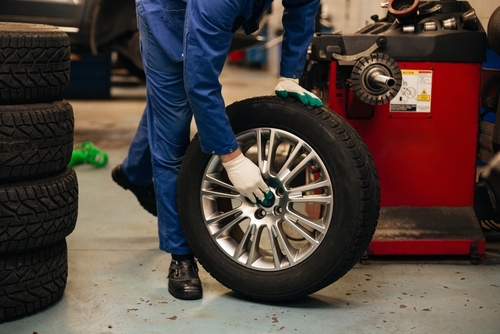
Tires are your vehicle's only connection to the road, dictating everything from braking distance to fuel efficiency. As tread wears down, a common dilemma arises: should I replace all 4 tires at once, or can I get away with just two?
While replacing a pair might seem budget-friendly, mismatched tires can compromise stability. To ensure your car remains safe and predictable, it is essential to understand what kind of tires your car needs based on its drivetrain and your typical driving conditions.
Last updated 3/31/2026 - Originally published 9/23/2020
Written by SimpleTire, Expertly reviewed by Brett Antosh
Should You Replace All Four Tires at Once?
For most modern vehicles, replacing all four tires simultaneously is the gold standard for safety. When tires have identical brands, models, and tread depths, your car’s handling and braking remain consistent.
Do all 4 tires need to be the same brand?
Generally, yes. Mixing brands or tread patterns can lead to:
- Uneven traction levels, especially in wet or snowy conditions.
- Erratic behavior from electronic stability control and anti-lock braking systems (ABS).
- Premature wear on the drivetrain or the new tires themselves.
If you are unsure about your current tread life, the experts at SimpleTire can help you evaluate whether a full set is necessary for your specific make and model.
Key Considerations for Tire Replacement
1. Vehicle Type and Drivetrain Requirements
The mechanical layout of your car often dictates whether you need to change all 4 tires:
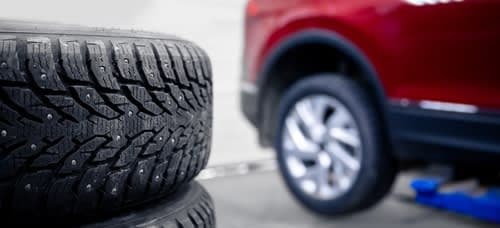
- All-Wheel Drive (AWD) & 4WD: These systems are highly sensitive. A difference in tire diameter (caused by varying tread depths) can trick the computer into thinking a wheel is slipping, causing unnecessary strain and potential damage to the drivetrain.
- Front-Wheel Drive (FWD) & Rear-Wheel Drive (RWD): These are more forgiving. If the other two tires have significant life left, you might replace only two. However, the new tires should always be placed on the rear axle to prevent fishtailing.
2. Risks of Replacing Only Two Tires
While replacing a pair saves money today, it introduces risks:
- Hydroplaning: New tires up front with worn tires in the back can cause the rear of the car to lose grip first in the rain, resulting in hydroplaning
- System Interference: Traction control systems rely on uniform wheel speeds; mismatched tires rotate at slightly different speeds, which can trigger error lights.
- Long-term Costs: Uneven wear often leads to needing another replacement sooner than if you had started with a fresh, balanced set.
3. Evaluating Tire Wear and Safety
Knowing whether I need to change all 4 tires depends on a quick physical inspection:
- The Penny Test: The Penny test is one of the quickest ways to tell if you need new tires. Insert a penny into the tread with Lincoln's head down. If you see the top of his head, your tread is below 2/32", and it is time for a change.
- Uneven Wear: If one side of the tire is bald than the other, you likely have an alignment issue that needs fixing alongside your new tires.
- Sidewall Damage: Bulges, cracks, or cuts are signs of structural failure and require immediate replacement, regardless of tread depth.
4. New vs. Used Tires
While used tires are cheaper, they carry hidden histories. Investing in a new set from SimpleTire ensures:
- Full manufacturer warranties.
- The latest rubber compounds for better grip.
- Peace of mind knowing the internal structure hasn't been compromised by previous curb impacts or overloading.
Common Pain Points for Tire Buyers
Understanding these hurdles can help you make a more confident purchase at SimpleTire:
- The "Sticker Shock" of AWD: Many owners are surprised to learn that a single unrepairable flat tire might require them to buy a full set of four to protect their AWD system.
- Confusion Over Tire Sizing: Deciphering strings of numbers like 225/50R17 94V can be overwhelming. Buyers often struggle to know which specifications (load index, speed rating are mandatory and which are optional.
- Installation Logistics: Buying tires online is convenient, but finding a local, reliable shop that will install "carry-in" tires at a fair price is a frequent concern for shoppers.
- Warranty vs. Reality: Many buyers find "60,000-mile warranties" confusing, as they often don't realize these only apply if the tires are rotated every 5,000 miles and the vehicle remains perfectly aligned.
- Balancing Performance and Budget: Choosing between a premium brand (like Continental or Bridgestone) and a budget-friendly alternative is a constant tug-of-war for the average consumer.
Summary of Informed Decisions
To wrap up, here is how to decide on your next set of rubber:
- Check your owner's manual: Always follow manufacturer guidelines regarding tire size and speed ratings.
- Prioritize uniformity: Whenever possible, keep the same brand and model on all four corners to maintain the vehicle's engineered handling balance.
- Consult the pros: If you're questioning what kind of tires my car needs, use online tools or speak to a technician to match tires to your climate and driving style.
- Monitor monthly: Check your tire pressure and tread depth once a month to catch wear patterns early.
Ready to ensure your vehicle is road-ready? You can buy tires online on SimpleTire to find the perfect match for your car, truck, or SUV.
Yes, you should replace all 4 tires at once if your car is all-wheel drive. Most AWD systems require all four tires to have the same tread depth (typically within 2/32" to 3/32" of an inch of each other). If one tire is significantly newer and larger in diameter than the others, it can cause the AWD computer to engage unnecessarily, leading to expensive drivetrain damage over time.
Yes, all 4 tires should be the same brand. While your car will technically drive with different brands, it is not recommended for safety. Different brands use unique rubber compounds and tread patterns that react differently to rain, heat, and snow. Mixing them can lead to unpredictable handling and reduced braking performance.
Ready to find the perfect tires?
Search By